
The Northwest Passage – of debatable benefit to our world?
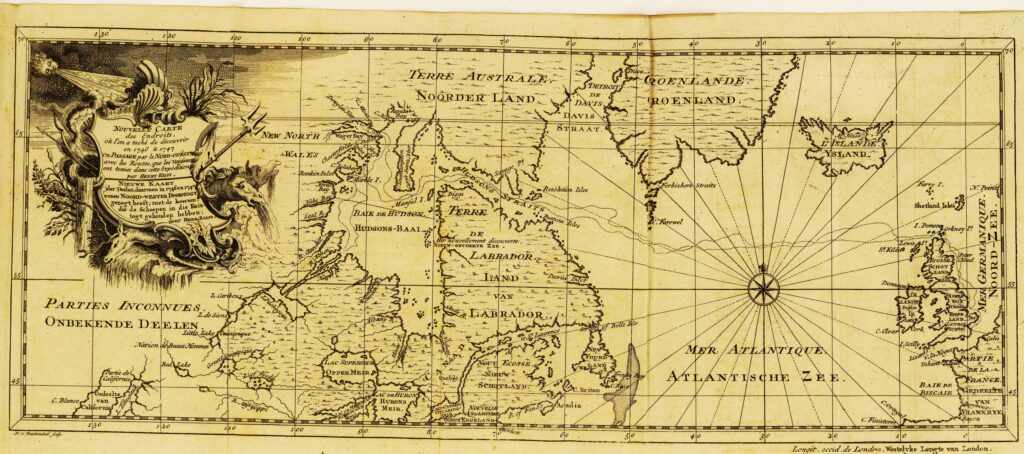
The quest for the North West passage succumbed to cannibalism
The failures and successes of the attempts to find a navigable route through the Canadian archipelago has long been the subject of investigation by scientists, historians and the media and have been brought to public attention again recently by the reporting of new discoveries made possible by the scientific research carried out by Canadian Waterloo University
This has resulted in the second person being identified from remains of the members of the ill-fated 1845 expedition to find the Northwest Passage. DNA from a preserved molar found in a jawbone on Prince William island was matched to the descendants James Fitz James, second in command and captain of the HMS Erebus on the expedition led by John Franklin in in 1845. Examination of his jawbone also revealed marks indicating cannibalism. That the expedition succumbed in the last resort to cannibalism has been suspected since search parties in 1850 were told of cannibalism by Inuit people. Research on remains from Fitzwilliam Island found more evidence the Jawbone of Fitz James confirms it.
Numerous expeditions but to no avail
The discovery of a Northwest Passage to shorten trade routes between the Atlantic Ocean was the Pacific Ocean was the main aim of explorers of the between the 16th and 19th century. Explorers such as Martin Frobisher, John Davis Henry Hudson and William Baffin explored various rotes but to no avail. John Ross, William Parry and James Clark Ross were among those facing the unpredictable Arctic ice in an attempt to find a passage. The maze of icebound islands was however extremely difficult to navigate, and the first complete navigation was only achieved between 1903 and 1906 by Roald Amundsen in the small boat Gjoa.
Today the route through the Nort West Passage saves 7,000 miles of the distance between Europe and Asia. A growing number of vessels use it, including fishing boats, racing craft and cruise liners, but the usage remains low. Alison Cook from the Scottish Association for Maritime Science explains that the number of weeks that the passage can be used in Summer has actually declined between 2007 and 2021 This is because older thicker melting ice is drifting towards the Canadian Archipelago and is reinforcing choke points and impeding navigation. In 2023, 18 yachts, 11 passenger cruise ships, and 7 commercial vessels transited the Northwest Passage over a longer period than normal due to a relatively ice free year, but it is clearly not yet viable as a major commercial shipping route.
Today the route is becoming more accessible
However, this could change in a generation according to research published in the Proceedings of the National Academy of Sciences Plus. Scientific sources are predicting that the Northwest passage will be substantially more accessible by 2040- 2050
If the passage becomes more accessible it poses questions and problems which will influence the geopolitics and the environment of the Arctic.
Canada claims sovereignty over the passage as part of her inland waterways. The United States disputes this describing them as international waters. a view supported by the European Union. The Inuit Circumpolar Council (ICC), claim that the ice and water in the Northwest Passage is their territory. The politics of access to the Northwest passage is a problem yet to be solved and is not made any easier by the fact the Arctic council, a body that promotes research and encourages cooperation among Arctic countries stopped many of its activities in response to the war between Russia and Ukraine.
Opening the passage will increase the threats posed
While the opening of the passage and less sea ice will be welcomed by haulers, tankers, fishers, and tourism companies, it will pose increased risks to polar species like walruses, narwhals and whales due to collisions and noise pollution. Other hazards include pollution, habitat degradation and the introduction of invasive species. Marine mammal experts argue that ships and Arctic animals cannot easily co-exist.
The indigenous people of the Arctic are threatened by physical and cultural effects of the opening of the Northwest Passage. The increase in traffic. including tourist ships could bring benefits, but at the expense of oil pollution and damage to fishing grounds. Communities could be disrupted by maritime infrastructure. There is a distinct fear that exposure of isolated indigenous communities to outside sources may result in loss of traditional language and cultural heritage.
The Northwest Passage was the holy grail for explorers for centuries seeking to avoid journeys around the cape of Good Hope and Cape Horn. but in the 21st century its relevance is debatable, especially with the rapid development of the more viable NSR (Northern Sea Route) which transits East to West. It may be fully navigable by 2045, 200 years after Franklin’s epic voyage, but is a faster transit between the Atlantic to the Pacific worth the environmental and cultural damage and the threat to geopolitical harmony?
About The Author - Dr Linda Parker
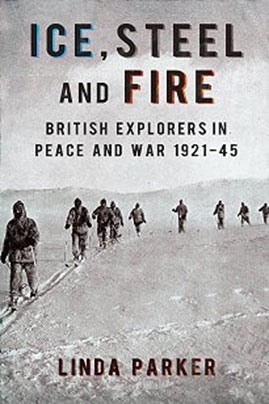
After teaching History for twenty or so years Linda decided to change course and enjoyed studied for her PhD at Birmingham University. She is now an independent scholar and author. Her main writing focus is on army chaplaincy in both world wars, and her main historical interests lie in 20th century military, social and religious history but she also has a keen interest in the history of polar exploration.
Linda is a co-founder of the British Modern Military History Society and is a member of the Royal Historical Society, the Western Front Association, the American Commission for Military History and the Society for Military History. She is a trustee of the Toc H movement and convenor of Toc H Wessex.


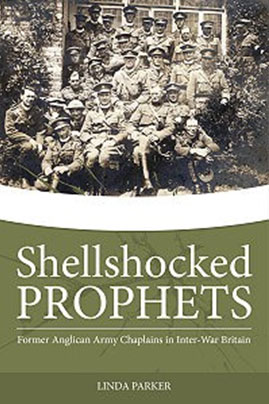
© Dr Linda Parker 2024