Trump’s Greenland Grab?
Trump's threats to Greenland
As the world is reeling from the executive orders of newly inaugurated President Trump, the issue of his threats to Greenland, the semi-autonomous territory of Denmark, have raised concerns in the international community about his intentions.
Trump’s stated aim to acquire Greenland for the United States could have serious effects on international security and diplomacy in the Arctic Circle and add to environmental concerns already pressing heavily on Greenland and the whole region.
The idea has brought to the world’s attention its largest Island, which due to melting ice, geographical position and mineral deposits, has become the place where aspects of climate change, scarce resources and debates on National security have been brought into focus. Concerns have been voiced, and the debate has intensified since the visit of Trump’s son to Greenland recently.
Russia and China's growing influence in the Arctic
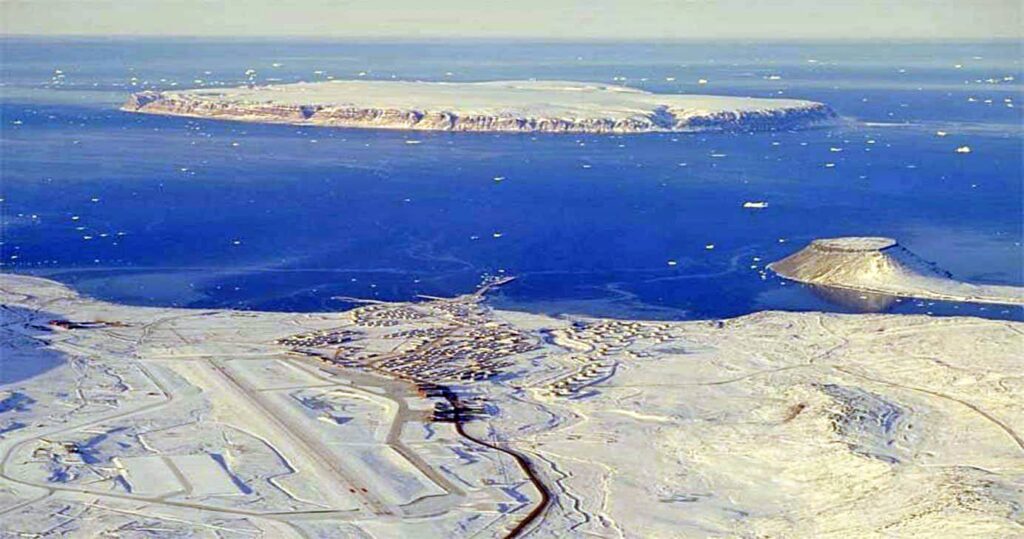
One of the ways in which Trumps pronouncements on Greenland may have an effect on global geopolitics is his announcement that the acquiring Greenland is a matter of us national security, stating “because we need it for national security – that’ s for the free world”. He cites worries about Russia and China’s growing influence in the Arctic. In recent years a trade alliance between these countries has resulted in exploiting ice melting conditions to establish a more accessible Northern sea route in the Eastern Arctic between Europe and Asia, and Trump has concerns that China, backed by Russia is increasing its military and economic strength in the arctic regions. A recent report from the CNA (Centre for Naval Research) comments on the importance the Arctic to China’s “overreaching strategic objects”, including “defending national sovereignty security and developmental interests “There have been reports of China trying to build airports on Greenland and negotiating to buy an old American naval base.
The geographical position of Greenland makes it potentially crucial in any resurgence of Cold War style standoffs and challenges in the Arctic. It is strategically positioned between the US and Russia. In the Cold War the U.S had Distant Early Warning Systems scattered throughout Greenland. Today Russia is deploying advanced missile defence systems in the Arctic to guarantee her power potential. The Daily Telegraph has been investigating Russia’s sea going capabilities and reports that “Putin’s icebreakers outgun the US in the Arctic”, suggesting that the Russian navy is preparing for the conflict that may inevitably follow the tensions caused by superpower rivalry and greater exploitation of fossil and mineral reserves in the Arctic. Meanwhile NATO is also carrying out exercises. The US Department of Defence wants to avoid the Arctic becoming a “strategic blind spot” and is monitoring developments and increasing surveillance.
Greenland has untapped mineral wealth
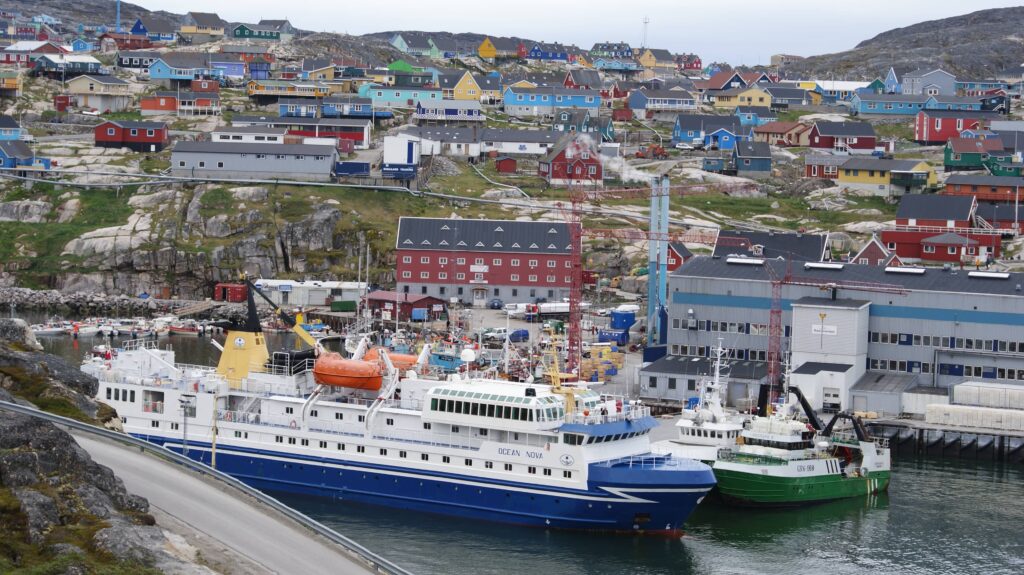
Another reason for Trump’s interest in Greenland is its untapped mineral wealth. A survey in 2023 revealed that 25 of the 34 raw minerals which are mentioned by the European Commission as “critical”. These include graphite, nickel, zinc, titanium and tungsten. As these become more accessible due to global warming and ice melt the Greenland government is seeking to find ways to exploit these reserves without damaging environment. Concerns about the proposed uranium mine at Kvanefjeld became a prominent issue in the recent elections, resulting in the pro-independence party Inuit Ataqatigiit becoming the largest party. The mining project is halted for the moment.
The diplomatic ramifications of Russia’s war with Ukraine resulted in a considerable weakening of the Arctic Council as all the countries involved in this important decision-making authority decided to boycott meetings in protest. This has resulted in a decline in the authority of the council as it is patently not neutral in this matter.
The US and Denmark have suffered a setback in their relationship because of the robust response to Trump’s suggestion. Although Greenland is an autonomous in matters of domestic matters, Denmark is still in charge of foreign policy and defence, Danish Prime minister Mette Frederiksen made it clear that Greenland is not for sale and the Greenlandic Prime Minister Mute B .Egede said at a news conference on 21st January: “The Greenlandic people have made it clear what they want to be. We do not want to be Danes. We do not want to be Americans.”
"We can’t have world order in which countries...help themselves to what they want”
Trump’s initiative has not been the first to suggest a take over of Greenland by the United States. In 1868 the Secretary of State, William Seward pointed put the benefits of obtaining access to Greenland’s large fisheries, abundant wildlife and mineral resources. Greenland was an important asset to the Allies in the Second World War. The “Defence of Greenland” treaty allowed the US to build airbases, facilitating the crossing of the Atlantic by air. Cryolite deposits were also used in aircraft production The US weather stations were vital in forecasting military operations, such as D-Day in Europe. In 1951, during the Cold War, an agreement was reached to allow the US to place many Distant Early Warning Stations there as part of NATO defence.
It seems clear that both Denmark and Greenland would not agree to a sale of Greenland to the US. On the surface the idea seems preposterous. The Danish foreign minister Lars Lokke Rasmussen has been reported by Agence-France Presse as stating: “We can’t’ have world order in which countries, if they are big enough, can just help themselves to what they want”. However, Trump has threatened to use military Force to obtain Greenland in the past and has reiterated that threat in a press conference on January 7th, refusing to rule out such a solution. In a phone call with Danish Prime Minister Mette Frederiksen, he also repeated his previous threats of tariffs on Danish goods.
Although the Greenlandic Government is vociferous in its condemnation of Trump’s remarks and stated aims, they have not ruled out ideas of closer cooperation with the US. The voice of America reported the response of Naaja Nathanielsen, a senior minister in the Greenlandic Government, who admitted that security maters were of concern to each country, and also, crucially “We want to engage more with the in the Greenland mineral sector”. The Greenland Government realise that the aid of the US would be imperative to this aim.
Trump’s decisive and threatening stand on the purchase of Greenland may well be a negotiating stance to win an increase military and economic presence in Greenland and therefore in the strategically and economically important Arctic Ocean. Climate change has resulted in the opening of new trade routes and the Arctic is where Russia and US have common border. However, his words and actions could have a detrimental effect on his relationships with European countries and NATO and threaten the delicate West/ East balance in a rapidly changing Arctic Ocean.
About The Author - Dr Linda Parker
After teaching History for twenty or so years Linda decided to change course and enjoyed studied for her PhD at Birmingham University. She is now an independent scholar and author. Her main writing focus is on army chaplaincy in both world wars, and her main historical interests lie in 20th century military, social and religious history but she also has a keen interest in the history of polar exploration.
Linda is a co-founder of the British Modern Military History Society and is a member of the Royal Historical Society, the Western Front Association, the American Commission for Military History and the Society for Military History. She is a trustee of the Toc H movement and convenor of Toc H Wessex.