
The War in Ukraine - Home by Christmas?
In what ways is the conflict in Ukraine similar to that of the First World War?
The present war between Russia and the Ukraine certainly has echoes of the First World War, the memory of which still resonates in many countries over 100 years later.
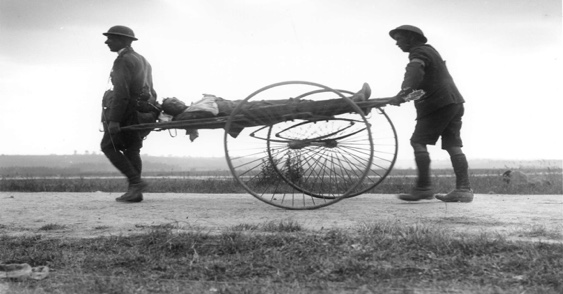
Both the present conflict and the First World War were started by countries with autocratic rulers with territorial gains in mind. The progress made by the Russian forces in the first stage of the war might indeed have encouraged the Russian government to hope that it would be all over by Christmas, but the war in Ukraine evolved into brutal trench warfare with many casualties which was reminiscent of the First World War. The first world war developed into a global war and there is a fear that Russia’s intentions are not confined to the Ukraine but are a precursor to wider intentions and the fear of the Ukraine joining NATO. Another comparison is the development of new weapons and innovative tactics, for example the learning curve experienced by the allied forces after the Battle of the Somme and the use of tanks, and in the Ukrainian war the use of drones, hyper-sonic missiles and satellite surveillance. However, this comparison disregards the capabilities of modern technological warfare in which sides are evenly matched leading to new and innovative battlefield tactics which make the fixed trenches of previous wars obsolete. The idea of Artificial Intelligence to recommend targeting is a world away from the balloons used for reconnaissance over the trenches. With both sides well equipped the front line can move between fast paced advance and seeming stalemate.
The use of drones, both long range and short range has played an increasingly important part in the war. Long range drones can venture into enemy territory while smaller drones can be used for artillery spotting, reconnaissance and actions against infantry. The Ukrainian army has encouraged civilian companies to donate low-cost drones in the “army of drones initiative” (Harvard Kennedy Belfer Centre). Naval autonomous weapons have caused trouble to Russian shipping, sinking the patrol vessel Sergei Kotov. The size and resources of the Russian army has produced a response from Ukraine which is agile, using both technological and conventional warfare.
As the War has progressed the difficulties for obtaining a peace escalate. The Ukrainians have what American Historian Michael Neiberg calls “sunk costs”, that is, the awareness that their struggle cannot be for nothing. In some ways the conflict has also become an ideological one, with both sides being aware that the battle is not only about the fate of the Donbas region. In 1919 the peace makers at Paris had a difficult, task with their decisions having impact throughout the 20th Century, any peace in the Ukraine will face similar problems and the decisions made will affect the shape of Europe in a lasting way.


It is remarkable to see that in our hi-tech world the conflict in the Ukraine seems to have headed into trench warfare more reminiscent of the First World War